DeliveredVerified developer
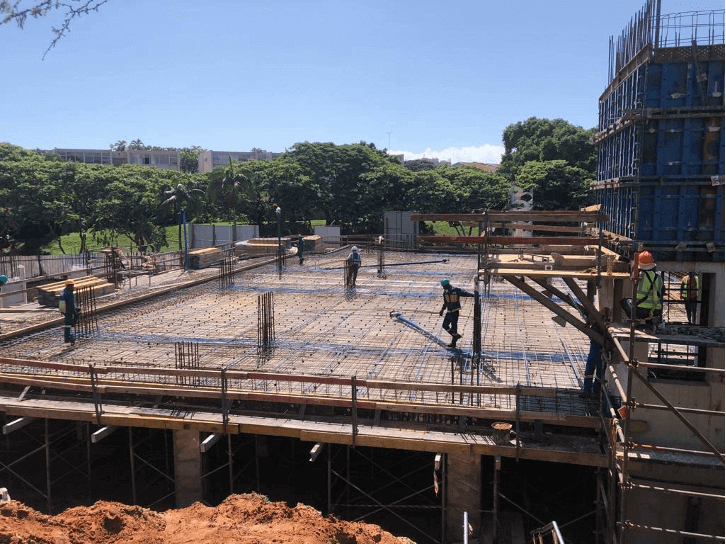
Apartment complex
Kent La Lucia
by Growthpoint Properties
63 sea-view apartments at La Lucia Mall, uMhlanga
ApartmentDelivery 2022
Durban · La Lucia / uMhlanga
From R 1.8M
Durban, South Africa's third-largest city, stretches along the east coast of KwaZulu-Natal between the Indian Ocean and the Berea hills. Its property market spans beachfront apartments, colonial homes in ridge suburbs, and secure estates to the north. The eThekwini Municipality sets property rates by precise category, while buying or renting follows a national legal framework from the Deeds Registries Act to the Rental Housing Act. This page covers the neighbourhoods, property types, and procedures to understand before committing.
No listings found in Durban yet. Check back soon!
Apartment complex
by Growthpoint Properties
63 sea-view apartments at La Lucia Mall, uMhlanga
Durban · La Lucia / uMhlanga
From R 1.8M
Mixed-use
by Abland
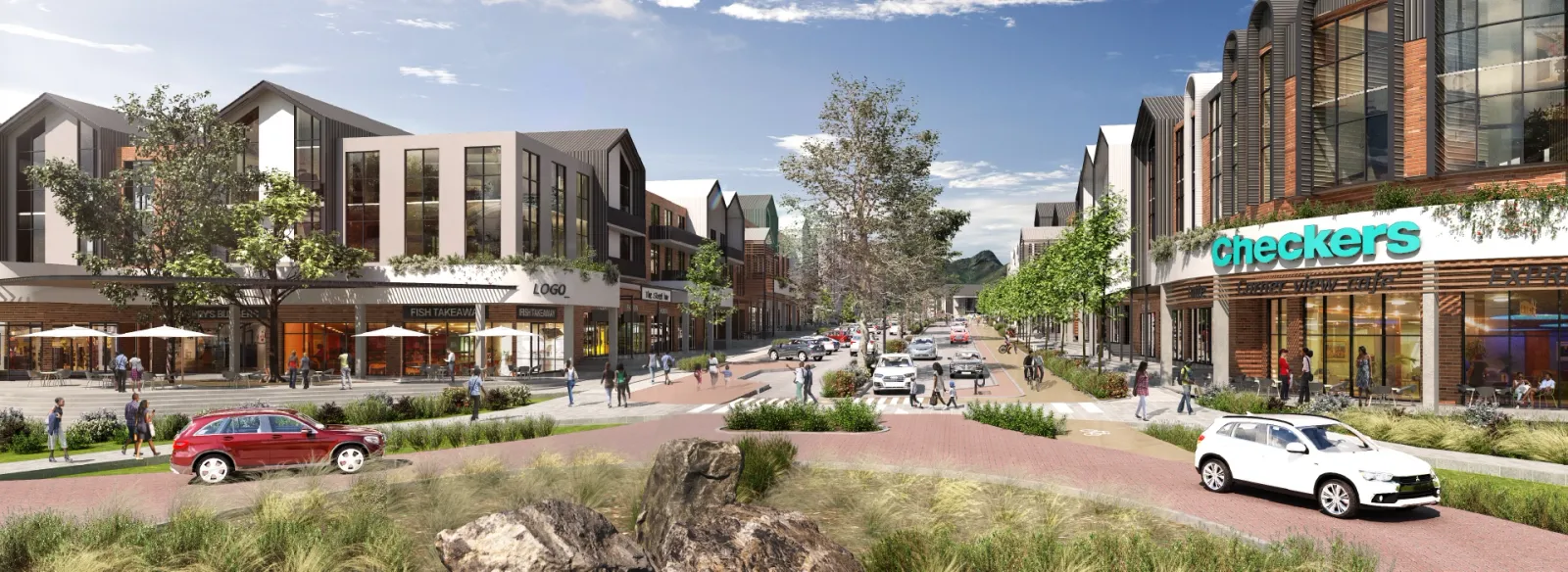
Groot Phesantekraal Precinct is a mixed‑use development in Durbanville, combining residences, retail and education.
Durbanville
Price on request

Mixed-use
by Abland
Planned development of retail and flexible office space at Groot Phesantekraal, near Durbanville.
Durbanville · Groot Phesantekraal
Price on request
Mixed-use
by Abland
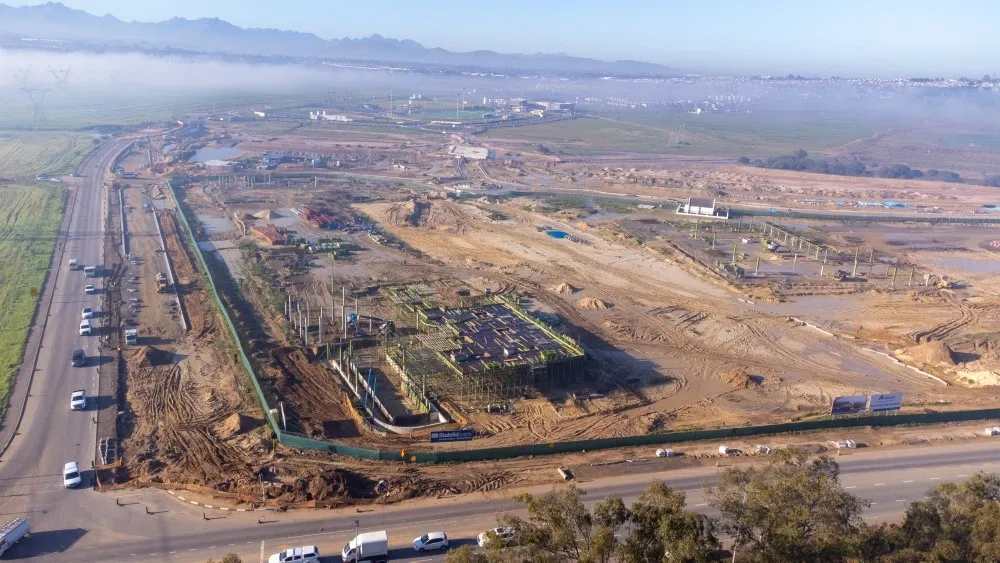
Located at the intersection of Okavango Rd and R312, Groot Phesantekraal View creates a dynamic mixed‑use district.
Durbanville
Price on request

Senior living
by Central Developments
Vineyards and mountains meet in this secure senior estate in Durbanville near Cape Town.
Durbanville
Price on request
Residential
by Devmark Property Group
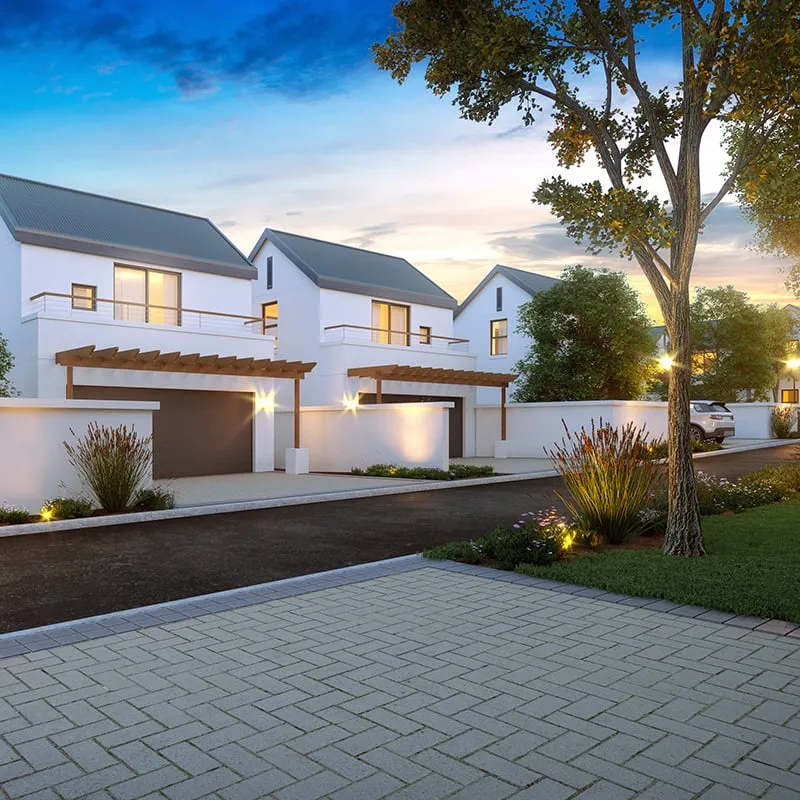
24 contemporary townhouses, secure, located in the heart of Durbanville, each with a double garage.
Durbanville
Price on request
Durban unfolds across several distinct zones. The beachfront (North Beach, South Beach, Point Waterfront) clusters sectional-title apartments, from compact studios to ultra-modern units overlooking the harbour. The Berea and its surrounds (Morningside, Glenwood, Glenmore) form a residential ridge above the city. Here, colonial, Edwardian and Victorian houses sit alongside contemporary multi-unit developments. Morningside in particular features character homes with wide verandas, close to Florida Road and its shops.
To the north, Umhlanga and Durban North show a residential offering oriented towards family homes and sea-view residences, as described in the area profiles consulted. The north-east of the metro, including Durbanville, is seeing new residential schemes and office parks emerge. Gated estates are multiplying: according to Lightstone data cited by Real Estate Investor, homes in gated residential estates exceeded 490 000 units nationally in 2025, nearly four times the 2003 level. In Durban, the Beachwood Coastal Estate development illustrates this trend with a coastal scheme integrating green space and golf.
On Imonga, according to the information available, listings show a total of 0 listings and the breakdown by type (annoncesParType) is empty; no apartment, villa or land listings in Durban and its surrounds are therefore recorded there to date. New developments include residential projects such as SITAR in the central area, Reside on the waterfront, and Waterfall at Izinga Ridge, as well as office parks in Westville and commercial space in Umhlanga New Town Centre.
In South Africa, foreigners may buy property without citizenship or permanent-residency restrictions, according to the Sotheby's International Realty blog. However, Section 35A of the Income Tax Act No. 58 of 1962 imposes a withholding tax when a non-resident sells: the purchaser must deduct a percentage of the sale price for SARS (South African Revenue Service), unless a tax directive is obtained to reduce the amount.
Property transfer falls, in South Africa, under the Deeds Registries Act 47 of 1937, whose full schedule is available on the SARS website. A conveyancer, necessarily admitted to the bar, prepares the deeds and lodges them for registration at the Deeds Office. The process covers: signing an offer to purchase, verifying the title deed, obtaining a municipal rates-clearance certificate, paying transfer duty, and final registration. According to the Department of Agriculture, Land Reform and Rural Development website, registration at the Deeds Office usually takes 7 to 10 working days after lodgement.
Transfer duty, set by the SARS schedule, applies on a sliding scale. For properties acquired from 1 April 2025: no duty up to R 1,210,000, then 3 % on the value above that up to R 1,663,800, rising progressively to 13 % above R 13,310,000. The full schedule is on the SARS website.
Residential letting is governed, in South Africa, by the Rental Housing Act 50 of 1999, whose full schedule is available on the SARS website. The landlord must place the deposit in an interest-bearing account for the tenant's benefit (section 5(3)). At lease end, if no damage is found, the deposit plus interest must be refunded within seven days. If repairs are needed, refund occurs within 14 days of the final inspection. The tenant has the right to request written proof of interest accrued.
The lease agreement must be in writing. It should specify rent, duration, party obligations and termination conditions. In case of dispute, the tenant may approach the relevant Rental Housing Tribunal for the area.
This answer is general and is not personal advice: before you commit, have your situation checked by a notary or a lawyer.
The eThekwini Municipality levies property rates based on market value recorded in the valuation roll. The new General Valuation Roll (GV2026), published in July 2025 and effective 1 July 2026, sets property values for the coming four years. Owners may object to their valuation before 31 March 2026 via the portal valuation2026.durban.gov.za.
For the 2025/2026 financial year, according to municipal tariff tables, rates are set at: 1.437 cents per rand of value for residential property, 3.6539 for commercial, 4.759 for industrial, and 9.4426 for vacant land. A rebate of R 105,000 applies to residential values above R 350,000, in addition to the statutory R 15,000 rebate. Indigent households (value up to R 350,000) receive 100 % exemption.
The seller must pay rates four months in advance to obtain the clearance certificate required for transfer. The buyer inherits any arrears not settled before registration.
Apartments and townhouses often fall under sectional title, regulated by the Sectional Titles Schemes Management Act No. 8 of 2011. Each owner holds a private section and an undivided share of common property. All owners automatically form the body corporate, responsible for maintaining common areas, insurance and reserve funds. A buyer should verify the body corporate's financial health, monthly levy amounts and conduct rules before signing.
Flood risk deserves particular attention. The torrential rains of April 2022 caused catastrophic damage across KwaZulu-Natal and Durban, leading to litigation against the state. Before any purchase, it is advisable to consult eThekwini's flood-zone maps and confirm that home insurance covers water damage.
Security influences residential choice. Walled complexes and secure estates with 24-hour guarding, CCTV and electric fencing form part of the available stock, though no source allows a conclusion on the level of demand. This choice carries recurring costs: levies for estates, private security fees for standalone homes.
Finally, utility connections (water, electricity) require municipal application. The buyer must ensure the seller has settled all accounts, as arrears can block issuance of the rates-clearance certificate.
Data and legislation cited come from the following sources, consulted on 25 November 2026.
Yes. South Africa imposes no citizenship or permanent-residency restrictions on foreign property purchases. However, on resale, Section 35A of the Income Tax Act requires withholding tax for SARS. A conveyancer or attorney should be consulted for the exact amount.
According to the Department of Agriculture, Land Reform and Rural Development, registration at the Deeds Office usually takes 7 to 10 working days after lodgement by the conveyancer. The overall timeline from offer to registration depends on suspensive conditions such as bond approval and compliance certificates.
The residential rate is 1.437 cents per rand of market value, according to the 2025/2026 municipal tariff tables. A rebate of R 105,000 applies to values above R 350,000. Properties valued at R 350,000 or below are 100 % exempt for indigent households.
Yes. The Rental Housing Act 50 of 1999 requires the landlord to place the deposit in an interest-bearing account for the tenant's benefit. At lease end, the deposit and interest must be refunded within seven days if no damage is found, or within 14 days of the final inspection if repairs are needed.
Review the body corporate's financial statements, monthly levy amounts, reserve fund status and conduct rules. The Sectional Titles Schemes Management Act No. 8 of 2011 governs these obligations. A conveyancer or attorney can help interpret these documents.